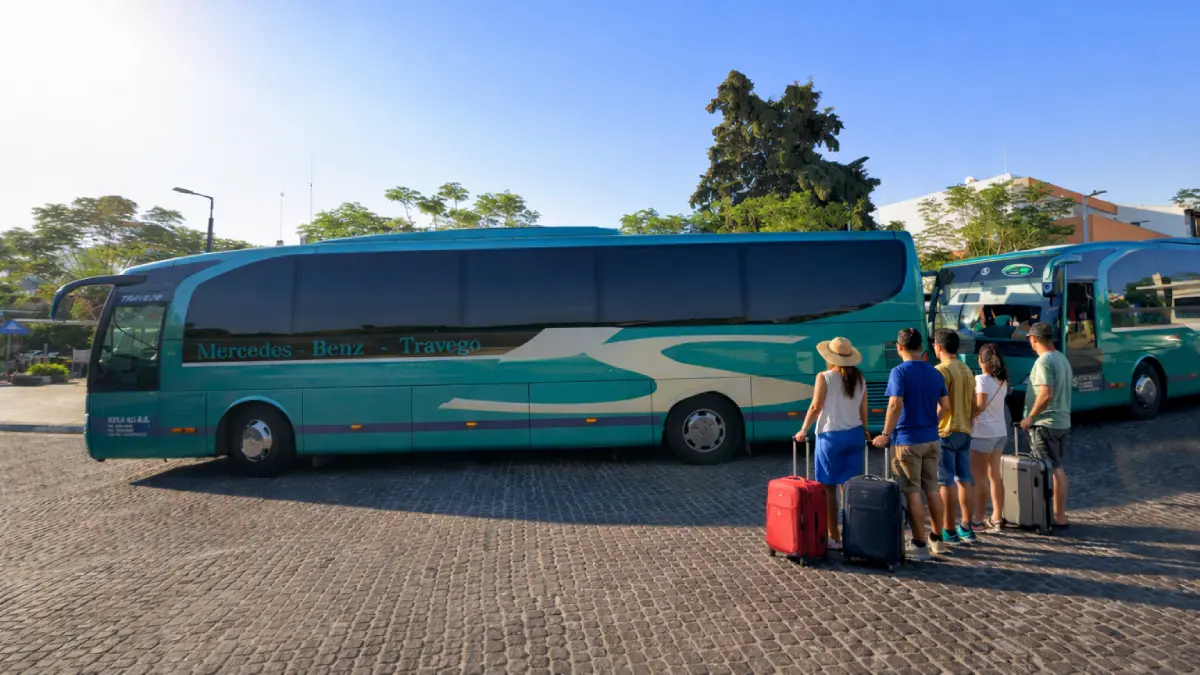
Buses, timetables, and practical local tips for the 2026 holiday season.
"Choosing the bus over a rental car isn't just about saving money. It's the most authentic way to travel alongside locals, completely free from the stress of finding a parking spot."
Public transport on Kos primarily relies on a well-developed network of KTEL buses, which seamlessly connect the main holiday resorts with Kos Town. This provides an economical and comfortable alternative to car rentals, serving as the most popular budget-friendly bus transfer from Kos Airport to your hotel, especially if you plan to visit famous beaches and historic sights located along the main routes.
KTEL Kos buses are highly affordable and offer a relaxed way to travel around the island. I highly appreciate that the network covers all major tourist spots, saving you from the stress of driving in unfamiliar terrain. For many travelers, a direct airport bus transfer to resorts like Kardamena, Mastichari, or Kefalos is the easiest logistical solution right after landing. Additionally, using public transit is an eco-friendly choice, which is important to me while traveling. Despite occasional challenges in finding real-time information online, I believe that KTEL Kos provides a reliable service in 2026 that serves both locals and international visitors well. I hope the system continues to grow, offering even more conveniences for travelers choosing the bus as their primary mode of transportation on the island.
Select your destination to instantly check routes and prices:
Public transport on Kos Island relies on two independent bus operators, easily distinguished by the color of their vehicles. Understanding the difference between them is key to traveling smoothly and avoiding unnecessary wait times at the wrong bus stop. KTEL Kos handles intercity routes (green/cream coaches), linking the capital with the airport and major holiday resorts like Kefalos or Kardamena. On the other hand, DEAS runs the local urban network (blue buses), operating within Kos Town limits and to nearby hotspots, including the famous Hot Springs (Embros Therma) and the Asklepiejon sanctuary. Tickets are not interchangeable between the two networks, and their main departure stations are located in different parts of town.
Features: Large modern tourist coaches connecting the capital with holiday resorts and the airport. Fully air-conditioned.
Destinations: Kos Airport, Kardamena, Kefalos, Tigaki, Marmari, Mastichari, Zia.
Station Base: 7 Kleopatras Str.Features: Standard transit city buses serving the capital and its outskirts. Perfect for quick trips from city hotels.
Destinations: The Asklepiejon, Psalidi, Agios Fokas, Hot Springs (Embros Therma).
Station Base: Harbor at Akti Kountouriotou Str.Many visitors struggle to find the central departure hub because the station is tucked away within the backstreets of Kos Town. It isn't located right on the main harbor front, but rather inside a block of buildings. Below is the precise location to help you find it easily (7 Kleopatras Str.), highlighting the exact spot on the map where ticket offices and departure bays are found.
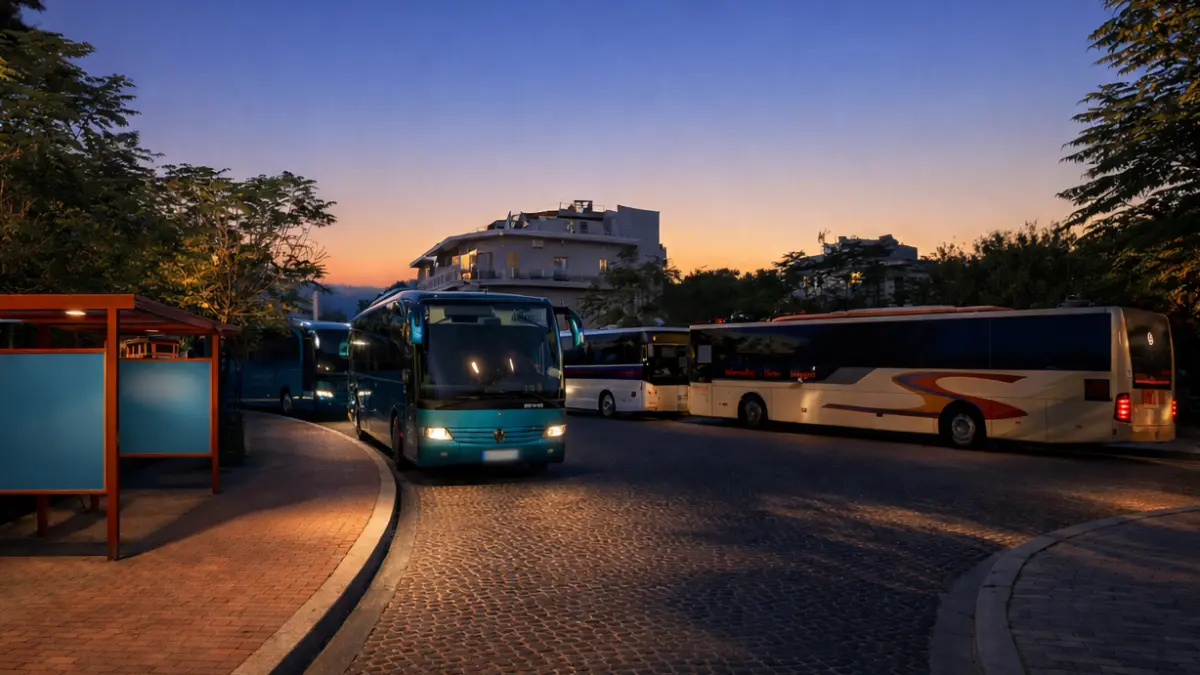
The bus network on the island is designed to enable budget-friendly sightseeing across Kos without the need for a rental car. The most important routes spread outward from the capital, reaching far-off sandy beaches and traditional mountain villages. By utilizing buses on Kos, you can effortlessly reach popular holiday resorts, ferry ports, and historic landmarks. Below is an overview of the most popular travel routes to help you plan your daily island excursions.
Fast connection (approx. 20-25 mins) to long sandy beaches. High frequency throughout the day.
The longest route (approx. 60 mins). Perfect for visiting the ruins of Agios Stefanos and Paradise Beach.
Crucial transit hubs. Sail to Kalymnos from Mastichari, or to the volcanic island of Nisyros from Kardamena.
Buses bound for Kefalos and Kardamena stop here. The cheapest airport transfer option.
Click on any marker or use the quick links below to locate key stations and bus stops across the island.
Click or tap to interact with the map
Select your destination:
When planning your budget for transportation on Kos Island, it is best to rely on the operator's official fares. The overview below lists one-way ticket prices departing from the main station in the capital. For peace of mind, we always recommend verifying departure schedules on the official website ktel-kos.gr.
| Destination (from Kos Town) | Estimated Time | Ticket Price |
|---|---|---|
| Kefalos (Western Bay) | ~60-70 min | 5.50 EUR |
| Kardamena | ~45 min | 4.20 EUR |
| Mastichari / Antimachia | ~35-40 min | 4.00 EUR |
| Marmari / Tigaki / Pyli | ~20-25 min | 2.50 EUR |
| Zia (Mountain Village) | ~35 min | 2.50 EUR |
| Kos Airport (KGS) | ~40 min | 4.00 EUR |
💡 Ticket Purchasing Tips:
The most intuitive method – you board through the front door and ask for a ticket to your destination.
At major hubs (Kos Town, airport, Mastichari), you will find brick-and-mortar ticket offices.
The e-ticket system supports major KTEL routes (green buses), connecting Kos Town with the airport and major resorts.
Remember to Validate: Tickets bought at a kiosk must be handed to the driver for validation or scanned. Tickets bought from the driver are valid immediately upon issue. Keep your ticket until the end of the journey!
Kos Hippocrates Airport (KGS) is a modern, though compact airport that has undergone significant modernization in recent years. The terminal layout is designed intuitively so that travelers can easily walk from the baggage claim area straight to their preferred choice of transport.
Right after exiting the arrivals hall, you will find yourself in the public zone where ATMs, information desks, and car rental desks at Kos Airport are readily available. If you haven't pre-booked a car, the terminal offers free Wi-Fi, allowing you to quickly check the current KTEL Kos timetables or book an online transfer.
The greatest advantage of the airport is the close proximity to public transit. The bus stop at Kos Airport is located just 50 meters from the main arrivals exit – simply cross a single lane. You don't need to search for ticket booths or automated machines. Bus tickets from the driver can be bought with cash directly upon boarding the vehicle.
It is important to remember that buses from Kos Airport only serve four direct routes. If your hotel is located in resorts like Tigaki, Marmari, or Psalidi, a transfer at the main station in Kos Town will be required. Due to heavy luggage and Mediterranean summer heat, Kos airport transfers and local taxis are highly popular on these routes, offering convenient door-to-door drop-offs.
Public operator KTEL Kos provides regular schedules connecting the airport terminal with the most strategically important points of the island. By choosing these connections, you avoid extra costs and connections in Kos Town.
The most popular line linking the airport with the central station in the island's capital.
Direct link to picturesque Kefalos. Note: this line typically has fewer daily departures.
Lightning-fast transfer to the port, where ferries depart for the neighboring island of Kalymnos.
Quick transit to one of the most vibrant nightlife resorts on the southern coast.
The overview below will help you easily estimate transportation costs from Kos Airport and select a solution fitted to your budget and timeframe, showing the average travel time for direct connections.
| Route (from Kos Town) | KTEL Bus | Taxi | Drive Time |
|---|---|---|---|
| Airport (KGS) | 4.00 € | approx. 35 - 40 € | approx. 35 min |
| Kefalos Bay | 5.50 € | approx. 50 - 60 € | approx. 50 min |
| Tigaki / Marmari | 2.50 € | approx. 18 - 22 € | approx. 15-20 min |
| Kardamena / Mastichari | 4.00 - 4.20 € | approx. 30 - 35 € | approx. 30 min |
Check the exact departure times for your arrival date and the complete KTEL ticket price list on the official KTEL Kos website.
If you are traveling in a group of 3-4 people, a taxi becomes a very cost-effective alternative. Official prices in 2026 are based on a tariff of approx. 1.50€ per kilometer plus a base starting fee.
Pro Tip: During the peak summer season (July-August), the taxi queue at the airport can mean a 30-40 minute wait in full sun. It is well worth considering a pre-booked private transfer via systems like Welcome Pickups – the driver waits in the arrivals hall with a name sign, and the price is fixed and paid upfront (approx. 39€ to Kos Town center).
When planning to explore Kos by bus, you must take into account the massive difference in departure frequencies between summer and winter. The island's transit system is almost 100% correlated with tourist traffic density.
During the peak summer season, KTEL Kos buses operate at maximum capacity, connecting the capital with the furthest corners of the island. However, with the arrival of autumn, many typical holiday lines are phased out. Understanding these changes will help you avoid disappointment at the bus stop and better plan your leisure time.
Buses on popular routes (Tigaki, Marmari, Mastichari) run very frequently, sometimes every 30 minutes from morning till night. Rides to the mountain village of Zia are perfectly timed for the golden hour sunset.
Transit mainly serves the local population (students, workers). Frequencies drop drastically to 2-3 departures a day, and tourist-specific buses (like to Zia) may be completely suspended.
Timetables change dynamically depending on tourist arrivals. Always snap a quick photo of the physical paper timetable posted at your specific bus stop or at the central hub!
Greek island public transit is undergoing a digital evolution, but it is still highly useful to maintain a healthy dose of traditional alertness. Although the official KTEL Kos website provides PDF schedules, the system is still a long way from the seamless digital standards of Western metropolises.
As a traveler, I must admit that the lack of real-time integration with Google Maps can be a challenge. Traditional methods, like printing timetables out or simply asking friendly locals, have their own charm but require better planning on our end. Seeing the immense progress made over the last few years, however, makes me optimistic – KTEL Kos is making active efforts to simplify our lives by offering more online info.
Buses on Kos can be very punctual. It is smart to arrive at the stop 10 minutes early – if a bus fills up completely, it might head off slightly ahead of schedule.
Large suitcases go into the luggage compartment underneath the coach. You don't have to pay extra for this, and your ride inside the air-conditioned cabin will be far more comfortable.
Despite technological progress, cash is still the primary payment method with drivers. Keep small change (5€, 10€ banknotes) ready – drivers can't always break 50€ notes.
Take a photo of the bus schedule directly at the stop. This is the most reliable source of information, which you'll have on hand even without cell coverage.
When you see the bus approaching, wave clearly with your hand. On less frequented routes, the driver might assume nobody is boarding unless you actively signal your intent.
Always double-check the time of the last return bus from the beach. After 21:00, service drops off drastically, and a taxi ride back from Kefalos to Kos Town can turn out quite expensive.
If you plan to tour the island intensively for a week, ask at the KTEL office in Kos Town about multi-day transit passes. Though rarely advertised, they are sometimes available during the peak season and can save you up to 30% on transport costs.
Everything about public transport and getting around Kos Island
Yes, most KTEL coaches on longer routes are modern and equipped with working air conditioning. For the blue DEAS urban buses, standards vary, but most have at least powerful fans.
Unfortunately, no. Neither KTEL nor DEAS buses are equipped to safely transport touring bicycles. However, large luggage like suitcases fits into the luggage holds beneath the bus without issue.
No. Greek public transit shuts down around 21:00-23:00 (even during peak season). If you plan to enjoy the nightlife in Kos Town or Kardamena, you must budget for a taxi ride back.
Tickets for urban buses are best bought at the ticket booths at the harbor (Akti Kountouriotou Str.) or directly from the driver upon boarding. DEAS and KTEL tickets are not interchangeable!
No. There is no metro, train, or tram network on Kos Island. The only choice for public transport is the bus (long-distance KTEL and urban DEAS). A small, wheeled tourist train also runs through the absolute center of the capital.
You can find official and daily updated schedules directly at the main bus station in Kos Town and on the operator's official website. Keep in mind that timetables change dynamically depending on the month (buses run much more frequently in July and August than in May or October).
The easiest way to reach the Embros hot springs is by taking the blue DEAS urban bus, which departs from the harbor in Kos Town. The bus drops passengers off directly at the parking area near the entrance path to the springs. The ride takes about 15-20 minutes.
From 25-40 EUR/day. Ultimate freedom, ideal for reaching the remote wild beaches of Kefalos.
From 15-25 EUR/day. No parking hassles and wind in your hair.
From 5-10 EUR/day. Kos is a flat island boasting brilliant cycling infrastructure across the north.
Convenient, available at taxi stands 24/7. The most expensive option (approx. 1-1.50 EUR per kilometer).