Travel Guide Updated for the 2026 Season

Top Attractions on Kos Island

Discover premier historic monuments, paradise beaches, and scenic mountain villages in the Dodecanese.

calendar_month Last Updated: 12.07.2026 | schedule Read time: 12 min
Attractions Guide – 2026

Things to See in Kos:
The Complete Sightseeing Itinerary

"Kos Island features an exceptional wealth of tourist attractions – ranging from ancient steps of Hippocrates to pristine sandy coastlines. Every destination has been verified by travel experts to deliver the absolute finest holiday experience."

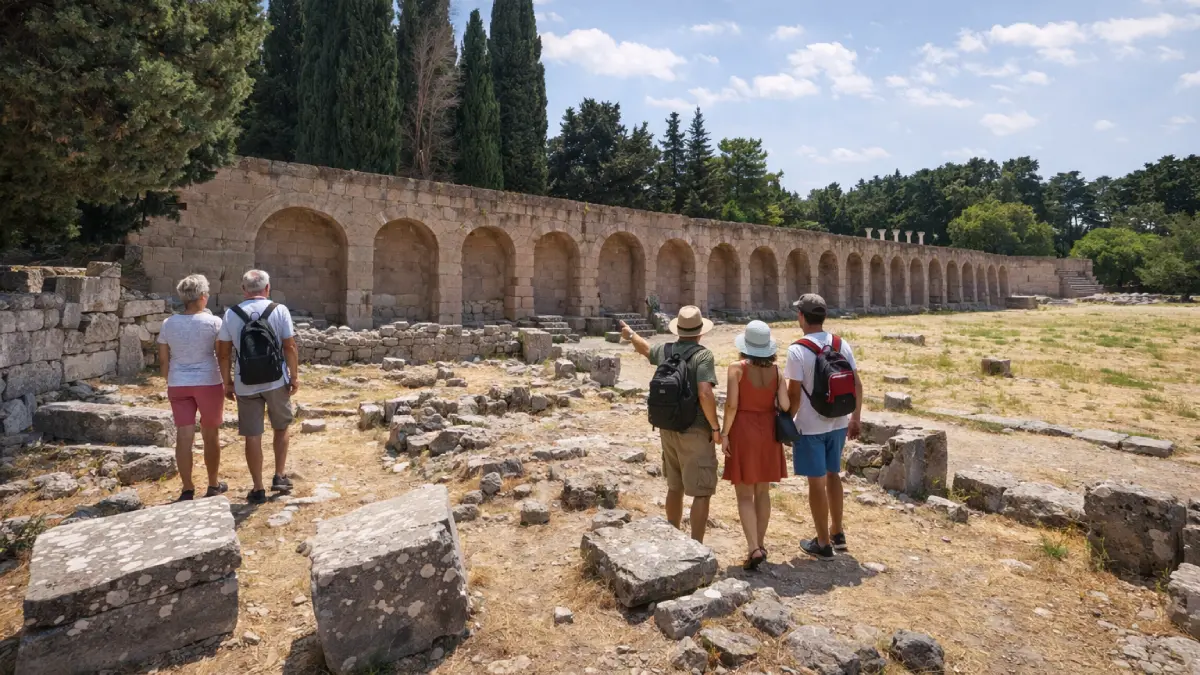
Planning a sightseeing tour of Kos Island offers a fascinating journey spanning nearly three thousand years of Mediterranean history. It is a unique destination where the classical columns of the Asklepiejon sit in close proximity to the massive stone walls of a medieval Crusader fortress, while the aroma of fresh Greek coffee at the harbor blends seamlessly with wild mountain herbs carried down from the traditional village of Zia.

When analyzing what to see on Kos, visitors quickly discover that the island is far more than a beautiful coastal resort; it represents a unique cultural mosaic. As the ancient homeland of Hippocrates, Kos actively preserves its historic wellness traditions, welcoming travelers to explore therapeutic open-air thermal springs and walk the same pathways tread by the father of modern medicine.

The island presents striking environmental contrasts – from the vibrant capital displaying refined Italian and Ottoman architectural influences to the rugged, wild coastal landscapes of the western Kefalos peninsula. Below is an authoritative expert selection of the destinations that define the unique character of the Dodecanese, forming the essential "must-see" priorities for any vacation itinerary. This guide outlines optimal locations for photography alongside logistical guidelines to avoid peak seasonal crowds.

Two Bus Networks:

Essential for Sightseeing:

  • KTEL (Green/Silver): Manages long-distance regional corridors connecting primary coastal resorts (Kefalos, Kardamena, Mastichari) and the airport terminal.
  • DEAS (Blue Buses): Serves the urban transit zone, providing direct, inexpensive links to the Asklepiejon and the famous Thermal Springs.
History & Archaeology

Core Historical Monuments on Kos
In the Footsteps of Hippocrates

Kos is an island steeped in a remarkable history spanning millennia, where structural remains mark ancient cultural milestones. Destination experts and history researchers have verified each ancient landmark on-site to interpret the classical spirit of the location where Hippocrates, the father of modern medicine, formulated early clinical traditions. This survey of the primary archaeological zones on Kos highlights the structures that deliver the most powerful impression when viewed in person.

02
Medieval Era

Neratzia Castle (Fortress of the Knights)

location_on Kos Town harbor front layers Status: Periodic structural preservation works active
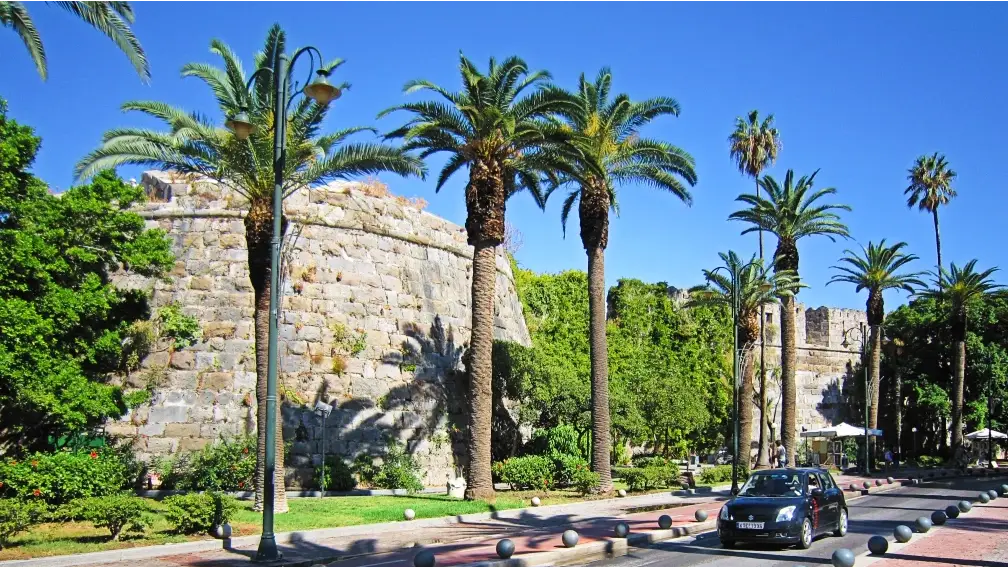
Medieval Neratzia Castle fortification overlooking the port of Kos, Greece
Fortress of the Knights of St. John – The imposing defensive walls of Neratzia Castle commanding Kos harbor.

Dominating the entrance of the primary harbor, Neratzia Castle stands as a powerful demonstration of late medieval military architecture. Constructed by the Sovereign Military Order of the Knights of St. John (Knights Maltese) during the 15th century, the fortress served as a critical defensive bastion protecting maritime shipping corridors against Ottoman naval incursions. It ranks as one of the finest preserved examples of medieval military engineering across the Dodecanese archipelago.

Architectural Integration & Defensive History

The primary fortifications of Neratzia Castle were raised between 1450 and 1478. To accelerate construction, the Knights utilized classical marble blocks and architectural fragments reclaimed directly from the ruins of the nearby Asklepiejon. Visitors exploring along the massive exterior ramparts can spot ancient inscriptions and column drums embedded directly within the medieval stone masonry. Following intense siege operations in 1522, control shifted to the Ottoman Empire, marking a key transition in the broader geopolitical history of Kos Island.

  • Moko-Defensive Bulwarks: Imposing stone bastions measuring up to 3 meters in thickness.
  • Historic Drawbridge Corridor: A defensive span link historically separating the fortified island structure from the main town settlement.
  • Knightly Heraldic Crests: Intricate stone carvings displaying official crusader insignia positioned above entry gates.
  • Harbor Panoramas: The elevated coastal battlements offer clear, unobstructed views across the marine basin toward the Aegean mainland.
photo_camera Scenic Photography Advice

The exterior perimeter walls present exceptional architectural views during the late afternoon. The warm sunset golden hour provides optimal lighting for photographing the medieval stone textures framed against the active harbor shipping lanes.

03
Island Symbol

The Tree of Hippocrates

location_on Kos Town (Platanos Square) euro Admission: Free public access
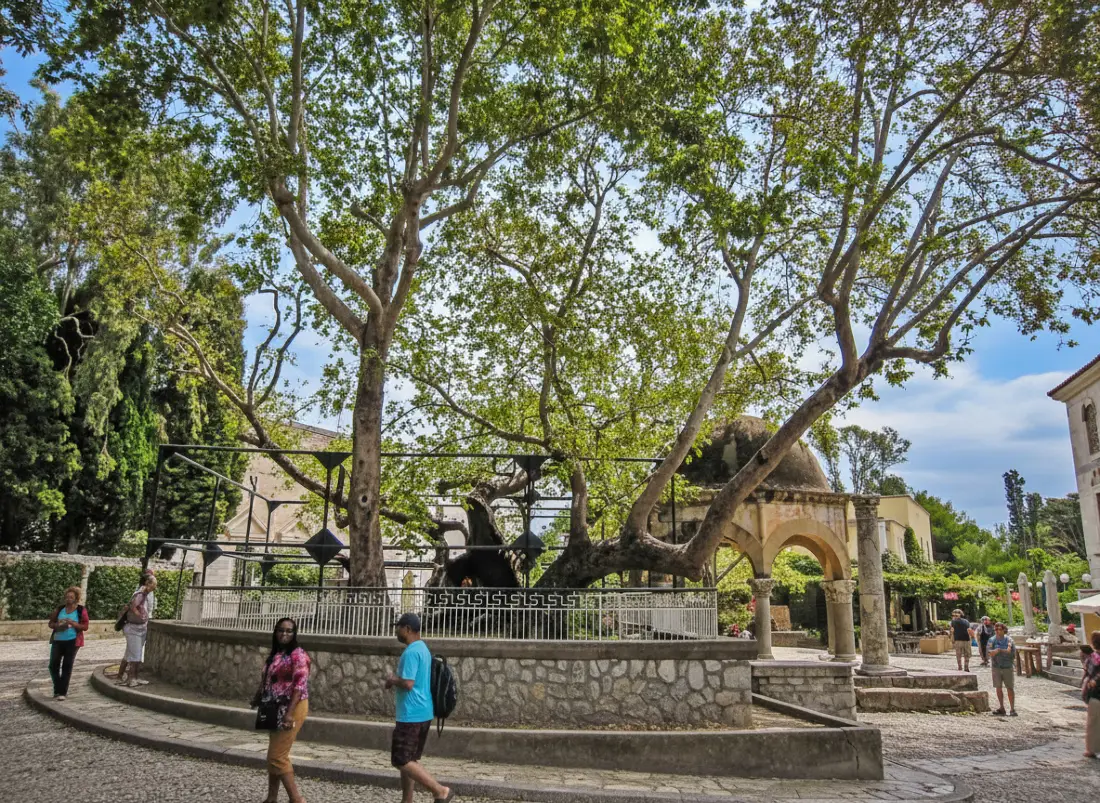
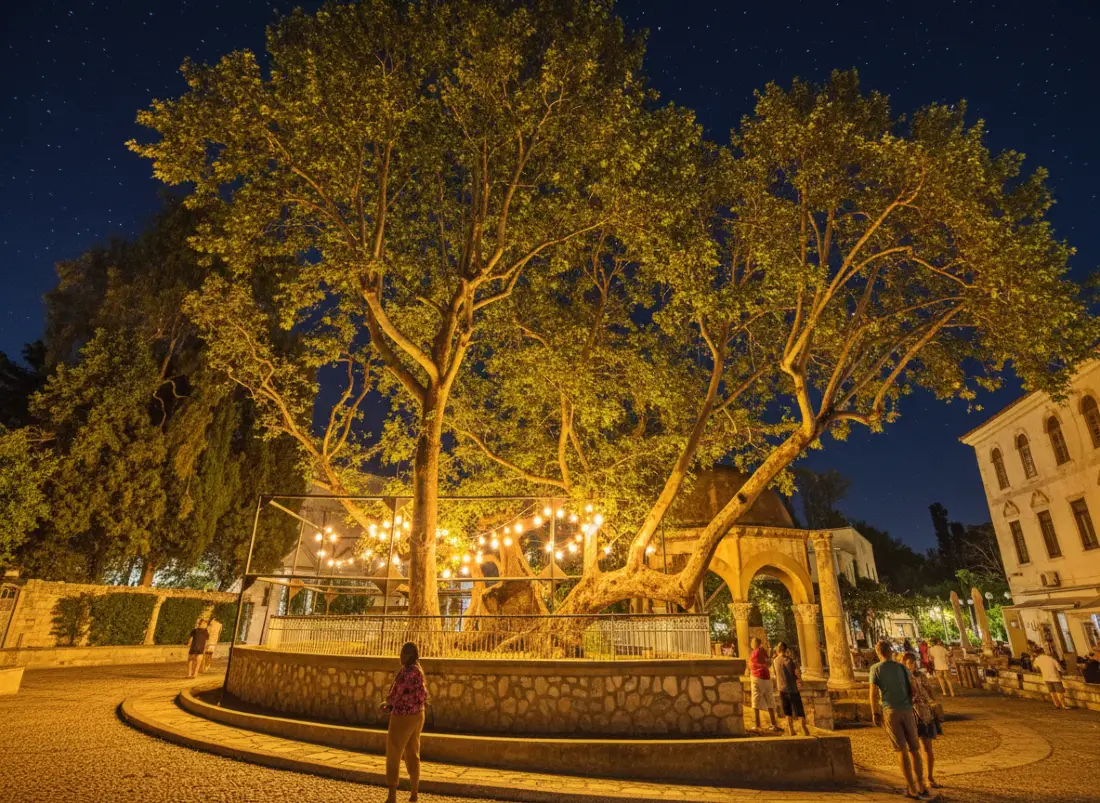
The monumental Tree of Hippocrates with defensive metal scaffolding at Platanos Square in Kos The illuminated Tree of Hippocrates at night in Platanos Square, Kos

The Tree of Hippocrates is a legendary oriental plane tree situated in the center of Kos Town, positioned next to the entry portal of Neratzia Castle. Local cultural tradition asserts that Hippocrates, the pioneer of medicine, gathered his students beneath the shade of this tree to lecture on clinical observation and ethics over 2400 years ago. Regardless of historical verification, the monumental site remains a powerful focal point of global medical heritage.

Botanical Dimensions & Historical Lineage

Modern botanical assessments indicate that the current active plane tree is approximately 500 to 700 years old, positioning it as one of the oldest and largest documented trees in Europe. Given its location, specialists suggest it represents a direct genetic descendant of the original specimen that stood during antiquity. The massive trunk structure, measuring roughly 12 meters in circumference, is supported by protective custom metal scaffolding to preserve its aging limbs.

  • Global Medical Monument: A symbolic landmark honoring classical medical origins.
  • Structural Preservation: The ancient canopy is safely secured via complex engineering supports.
  • Vibrant Urban Core: Bordered by traditional shaded cafes and open-air tavernas within Platanos Square.
  • Continuous Access: Accessible to the public 24/7 without entry requirements.

explore Notable Surrounding Sights:

Located directly adjacent to the ancient tree is an ornate 18th-century Ottoman fountain, alongside the historic Mosque of Gazi Hasan Pasha. These landmarks present fine examples of cultural coexistence, demonstrating how the complex history of Kos Town weaves classical Greek, Roman, Byzantine, Crusader, and Ottoman influences into a cohesive architectural landscape.

04
Classical Antiquity

The Ancient Agora of Kos

location_on Kos Town center (Adjacent to main harbor) euro Admission: Free open-air access
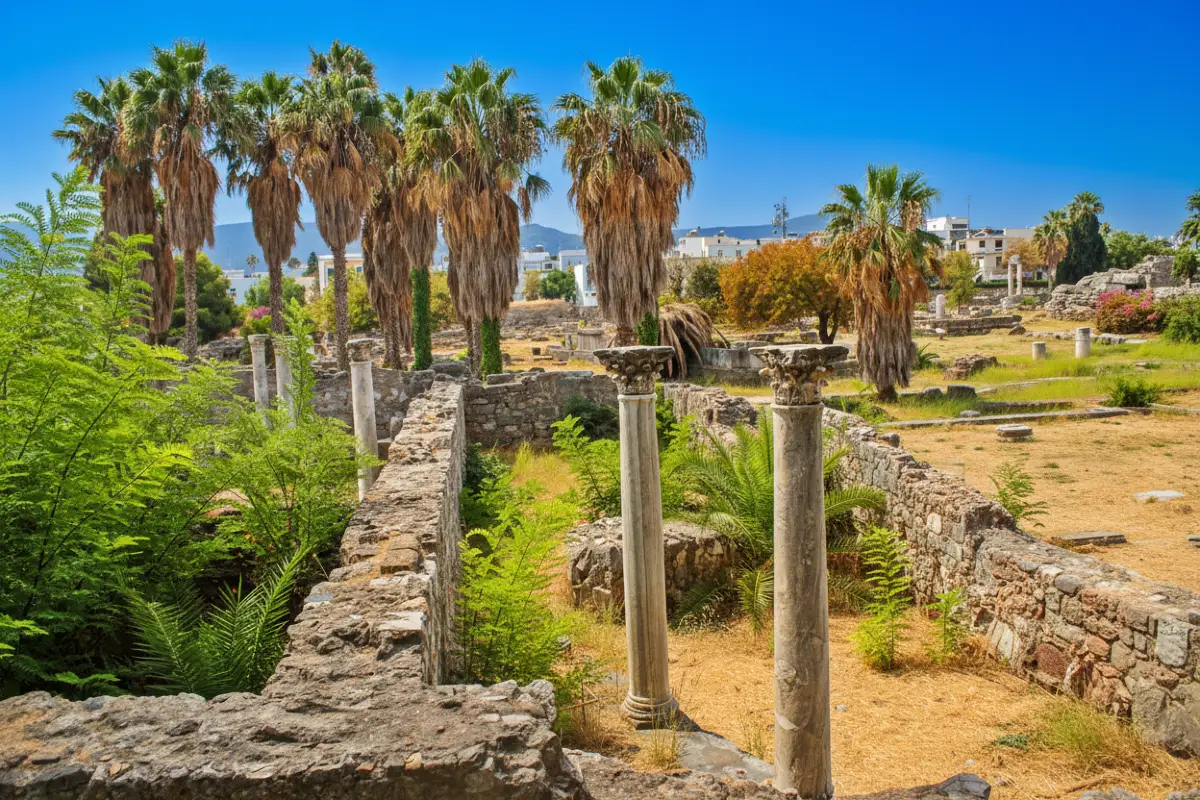
Reconstructed marble columns and stone walls inside the Ancient Agora of Kos Town
The Ancient Agora – Architectural foundations of the primary civic, political, and commercial center of classical Kos.

Serving as the commercial and social epicenter of the ancient city, the Ancient Agora presents a vast public archaeological zone accessible directly from modern town walkways. For travelers identifying the best free things to do in Kos Town, the Agora represents an excellent option. The expansive layout allows visitors to walk among classical column bases, ancient shop foundations, and monumental retaining walls that date back to the island's urban reorganization following a major earthquake in 366 BC.

Key Features to Identify:

  • Classical Porticoes: Partially re-erected stone columns featuring refined Hellenistic and Doryjskie capitals.
  • Sacred Precincts: Preserved structural foundations of ancient temples dedicated to Hercules and Aphrodite.
  • Byzantine Basilica: Remnants of an early Christian religious structure introduced during the 5th century AD.
explore Archaeological Navigation Tip

The open-air grounds of the Agora are extensive and offer minimal shade from the sun. Sourcing a basic site map or utilizing a digital guide before entering is highly practical; it ensures you can easily locate and identify specific zones like the sanctuary of Aphrodite, which might otherwise appear as generic stone rows without documentation.

05
Roman Period

The Roman Odeon of Kos

location_on Western archeological sector of Kos Town euro Admission: Free public entry
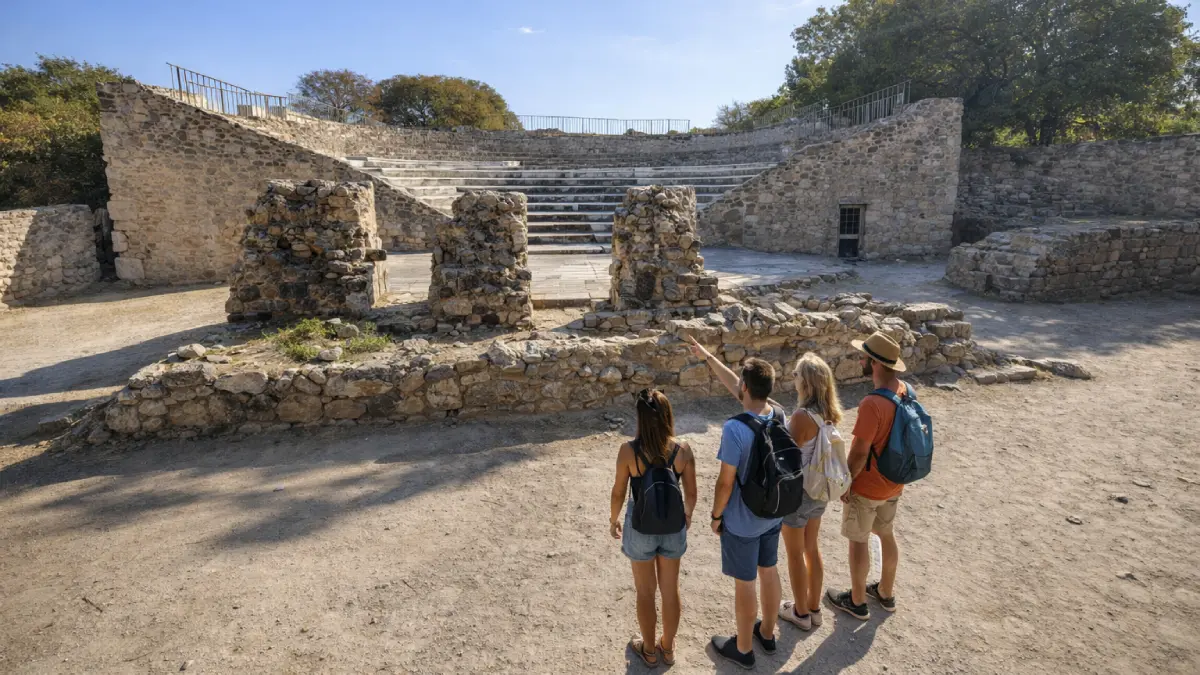
The restored seating tiers and semicircular orchestra of the Roman Odeon in Kos Town
The Roman Odeon – A well-preserved ancient indoor theater and assembly hall in Kos Town.

Dating to the 2nd century AD, the Roman Odeon of Kos represents an outstanding example of preserved classical civic architecture and ranks as a premier free entry cultural attraction on Kos. Originally constructed as an indoor musical theater and meeting hall for the local senate, the structure accommodated approximately 750 spectators. The semicircular layout demonstrates refined Roman engineering, featuring excellent acoustics that can still be tested by standing in the center of the restored marble orchestra floor.

Key Features & Sightseeing Points:

  • Authentic Seating Tiers: The lower nine seating rows are crafted from original classical white marble, distinguishing them from upper structural restorations.
  • Interior Vaulted Corridors: Visitors can access the brick-lined sub-structural passageways below the seating bank to observe ancient audience circulation designs.
  • Acoustic Center: Speaking from the absolute center of the lower stage circle demonstrates the precise vocal resonance engineered by Roman architects.
  • Adjacent Excavations: The surrounding shaded park spaces host open excavations revealing Roman bath foundations and classical mosaic floors.
history_edu Expert Itinerary Note

The Odeon is enveloped by a mature pine grove that delivers excellent natural shade, making it a fine spot to visit during hot afternoon windows. For clear architectural photographs, ascend to the highest tier of the seating arc to capture the geometric symmetry of the theater set against the trees.

More Regional Historical Landmarks
An Architectural Summary

Preserved archaeological remains of Roman baths and Casa Romana in Kos
Roman Era

Casa Romana & Roman Baths

An expansive reconstructed Roman villa displaying mosaic flooring, central courtyards (peristyles), and sophisticated private thermal bath systems reflecting historical luxury.

location_on Kos Town archaeological sector
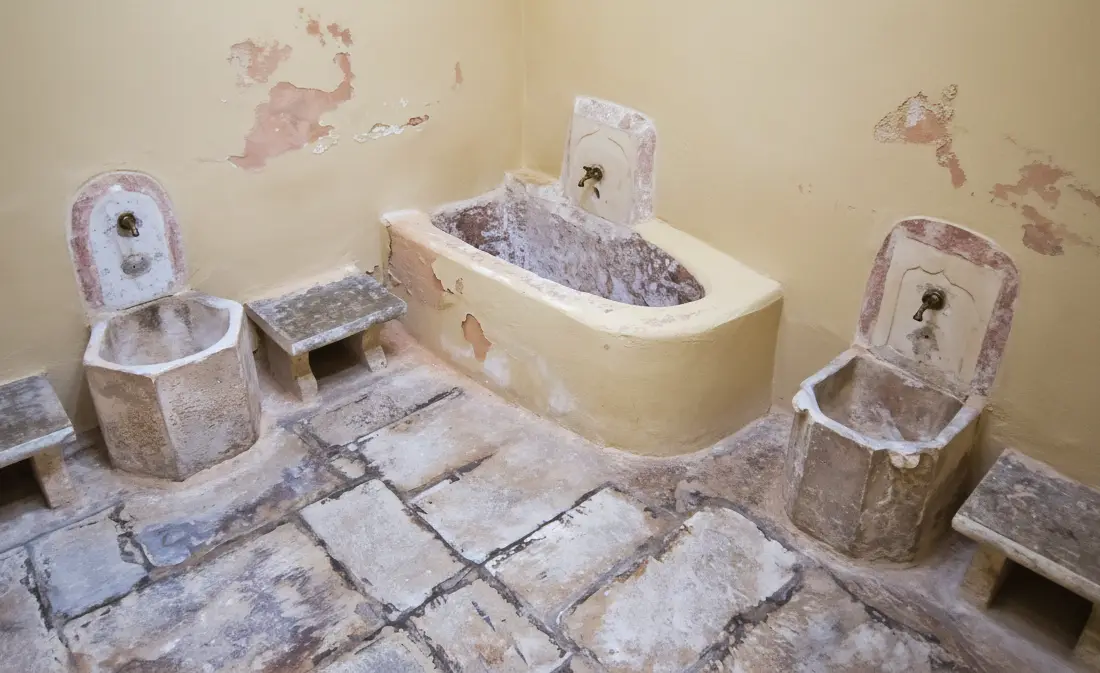
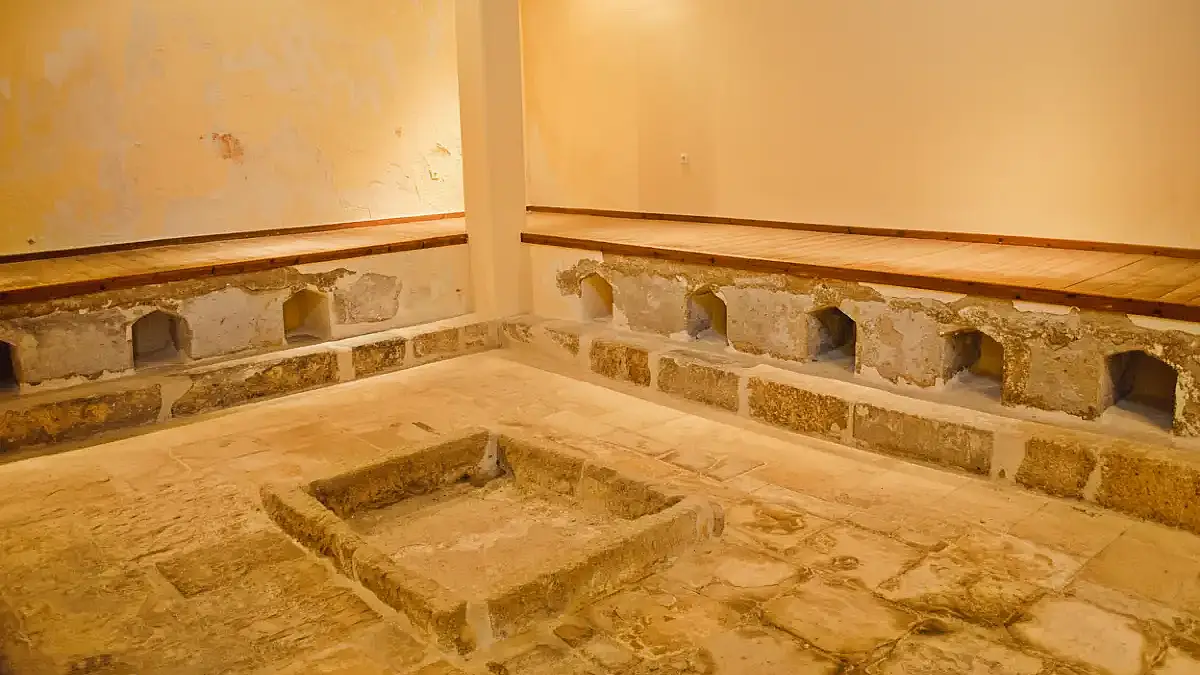
Historic dome structure of the Ottoman Hammam bathhouse in Kos Town
Ottoman Period

The Ottoman Hammam (Turkish Bath)

An 18th-century Ottoman public bathhouse structure documenting regional historical transitions, featuring classic masonry domes and authentic internal heating vaults.

location_on Kos Town historical center
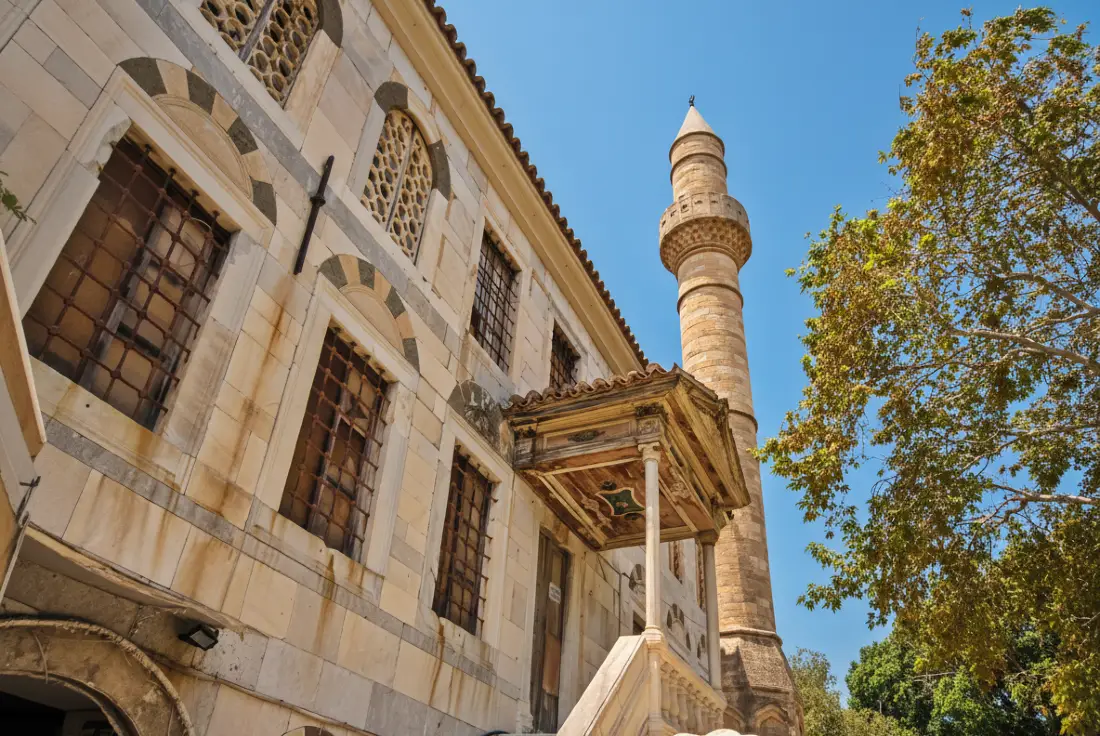
The grand minaret and facade of the Mosque of Gazi Hasan Pasha in Kos Town
Ottoman Period

Mosque of Gazi Hasan Pasha

Raised in 1786, this landmark features a prominent multi-tiered stone minaret and classic archways, serving as a key monument of Islamic art in the city center.

location_on Platanos Square (Adjacent to the ancient plane tree)
Medieval Era

Antimachia Castle

An extensive medieval fortress raised by the Knights of St. John in the island's interior, featuring massive outer curtain walls and the remnants of two historic Byzantine chapels.

location_on Near Antimachia village (Island interior plateau)
Nature & Coastal Recreation

Natural Wonders & Pristine Beaches on Kos
Thermal Springs and Golden Sands

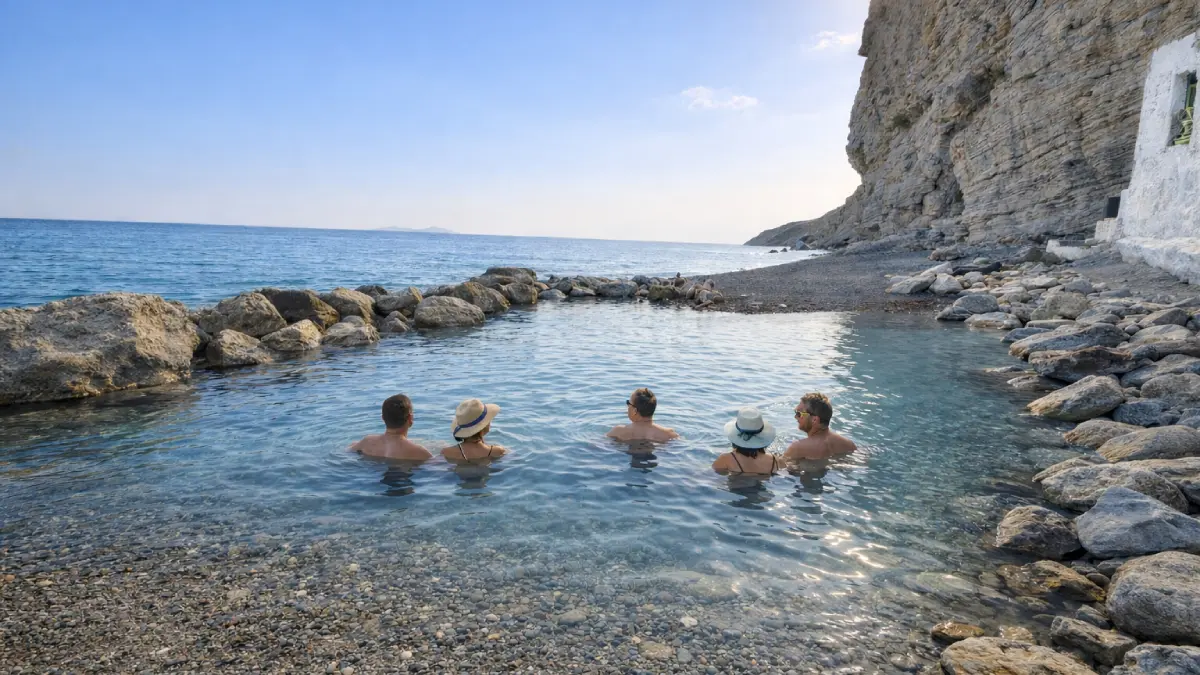
Beyond its classical ruins, Kos features distinct environmental landscapes, ranging from therapeutic volcanic marine springs to expansive turquoise bays. The island's geography matches active coastal resorts with the wild, rugged terrain of the western Kefalos peninsula. Whether seeking wellness within natural thermal sea pools or looking for secluded, pristine shorelines along the Dodecanese archipelago, the local coastline delivers exceptional variety. The following curated registry highlights the island's premier natural landmarks, providing strategic guidelines to enjoy these spots comfortably.

Sandy Coastline

Paradise Beach

location_on Kefalos Bay area (Western sector of the island) beach_access Amenities: Managed sunbed rental sectors available
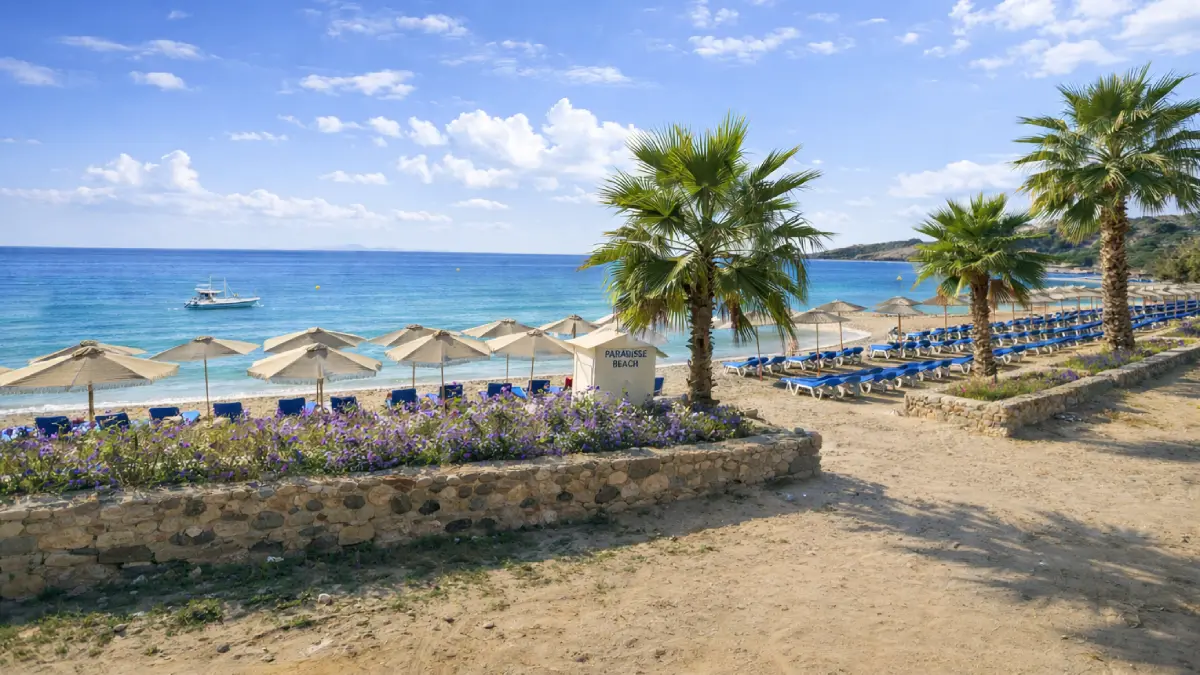
Paradise Beach on Kos Island – fine golden sand and crystal clear water in Kefalos Bay
Paradise Beach – The island's premier fine-sand beach, celebrated for its clear shallow water and volcanic gas vents.

Paradise Beach ranks as the most famous sandy beach on Kos Island. Featuring fine, soft golden sand framed by shallow turquoise waters and dramatic coastal cliffs, it represents an outstanding beach landscape.

The destination is unique due to an underwater volcanic phenomenon known locally as "Bubble Beach." Natural volcanic gas vents release continuous streams of fine bubbles through the seabed close to the shoreline, creating an open-air marine jacuzzi. Because the sandy sea floor slopes gently and gradually into the water, Paradise Beach is highly recommended for families traveling with younger children and enthusiasts of standard water sports.

Available Amenities & Services:

  • Pristine Shallows: Exceptionally clear, calm water well-suited for swimming and snorkeling.
  • Water Sports Center: Windsurfing equipment, stand-up paddleboards (SUP), and sea kayak rentals.
  • Beach Infrastructure: Organized zones featuring sunbed rentals, parasols, and open-air beach bars.
  • Parking: Expansive, free vehicle parking lots situated directly next to beach paths.
directions_bus Transit Logistics

Accessible via the regional KTEL Kos-to-Kefalos bus route (request the Paradise Beach junction stop), followed by a 10-minute walk down the access road. Navigating via a rental car or scooter provides maximum flexibility.

Additional Recommended Beaches on Kos

Family Friendly

Tigaki Beach

An expansive, fine-sand beach featuring very shallow coastal waters, making it highly safe for children. Well-serviced by public urban buses from Kos Town running every 30-60 minutes.

beach_access Fine Sand family_restroom Shallow Waters restaurant Local Tavernas directions_bus Bus Link
Highly Scenic

Agios Stefanos Beach

A beautiful sandy beach directly overlooking Kastri Islet and its iconic blue-roofed chapel. Offers clear water alongside the exposed foundations of two early Christian basilicas.

layers Sand & Shingle photo_camera Photogenic Sights church Historic Chapel directions_car Vehicle Advised
Near Capital

Psalidi Beach

Extends along the eastern coastline from Kos Town. Primarily shingle and pebble topography featuring deep, clean water. Highly popular for cycling due to a dedicated coastal bike path.

reorder Shingle/Pebble pedal_bike Coastal Bike Path apartment Near Hotels directions_bus Urban Bus
Kefalos Peninsula

Kamari Beach

A broad, peaceful beach situated within the primary bay of Kefalos. Tends to host fewer tourist crowds than Paradise Beach while providing excellent seaside seafood tavernas.

beach_access Soft Sand self_improvement Quiet Ambiance flatware Seafood Tavernas directions_car Vehicle Advised
Local Culture & Ambiance

Traditional Villages & Towns on Kos
Discovering Authentic Aegean Character

To capture the authentic lifestyle of the Dodecanese, exploring the island's traditional villages is highly valuable. Far from the busy coastal hotel strip, narrow stone-paved lanes and squares draped in bright bougainvillea reveal traditional community character. These locations showcase genuine Greek hospitality alongside multi-generational agricultural heritages. Exploring these settlements at a leisurely pace – perhaps over traditional Greek coffee in the shade of a central square – reveals distinct cultural depth.

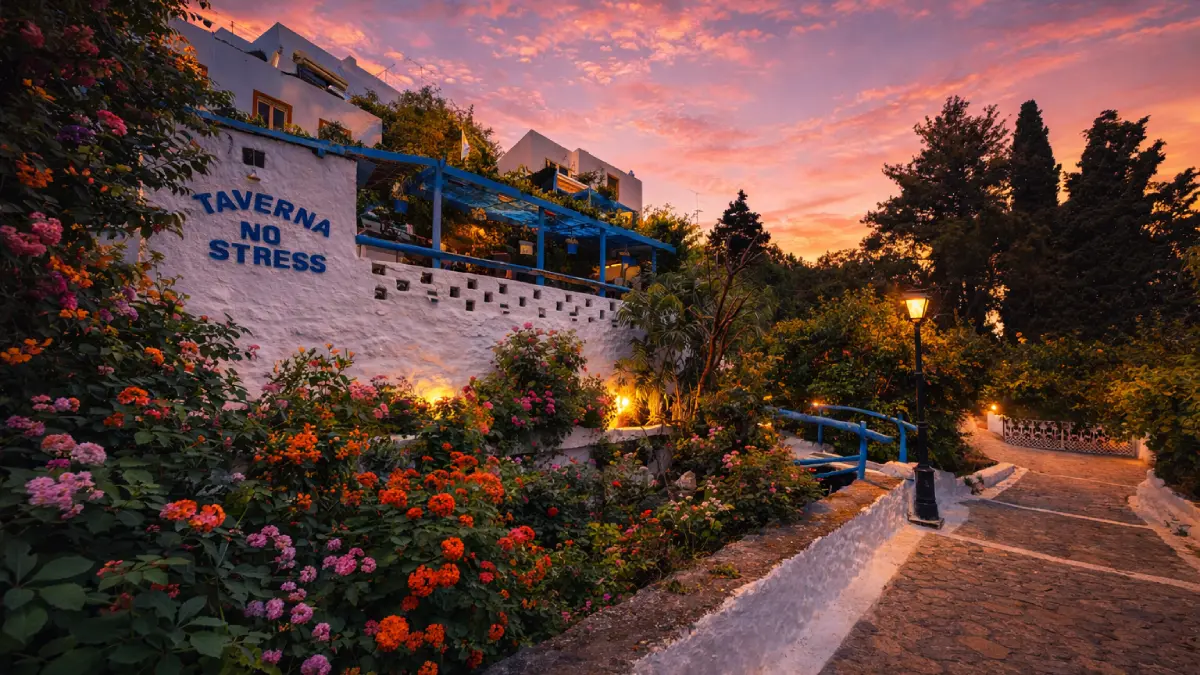
Panoramic sunset view from a traditional restaurant terrace in Zia village on Kos Island
Traditional mountainside tavernas in Zia – globally recognized as the premier location for panoramic sunset views over the Aegean archipelago.
Island Capital

Kos Town

The Cultural & Historical Hub

account_balance
Archaeology: Host to the Ancient Agora, Odeon, and the Tree of Hippocrates.
nightlife
Vibrant Marina: Modern waterfront dining promenades and a lively historical core.
Coastal Hub

Kardamena

Center of Holiday Entertainment

beach_access
Sandy Shores: Features an expansive, continuous piaszczysta beach line.
volcano
Transit Port: Primary departure harbor for daily maritime ferries to Nisyros volcano.
Western Core

Kefalos

The Island's Historic Ancient Capital

history_edu
Traditional Character: Preserves a quiet, highly authentic Greek village pace.
photo_camera
Bay Panoramas: Commanding hillside views overlooking the broad bay and Kastri Islet.
Heritage Site

Antimachia

Windmills and Agricultural Traditions

wind_power
Active Windmill: Features a fully operational traditional stone windmill.
museum
Traditional House: An ethnographical museum demonstrating 19th-century island life.
Logistics & Planning

Practical Information
For Independent Sightseeing

Thorough preparation forms the basis of a stress-free holiday, enabling visitors to focus fully on exploring rather than constant navigation. The registry below highlights current market entry rates, structural opening hours, and transport considerations to streamline daily planning across Kos Island.

payments Tickets & Entrance Fees

  • Asklepiejon Sanctuary: 8 € link Primary Site
  • Casa Romana Exhibition: 10 € link
  • Archaeological Museum of Kos: 10 € link
  • Neratzia Castle Fortress: Closed for preservation works; entry is standardly free when open.
  • Ancient Agora Ruins: Free Entry
  • Roman Odeon Site: Free Entry
info

Children and youth up to 25 years of age from EU member states receive free admission upon presenting a valid passport or student ID card.

history_toggle_off Standard Opening Hours

  • Summer Season (May–October): 08:00 AM – 20:00 PM
  • Winter Season (November–April): 08:30 AM – 15:30 PM
  • Weekly Closing: Most state-managed museums and archaeological zones remain closed on Tuesdays.
Official Free Admission Days: March 6, April 18, May 18, the final weekend of September, and October 28.

commute Transit & Connections

  • Asklepiejon: Serviced by urban DEAS Bus Line 3 departing from Kos harbor, or accessible via bike paths (4 km).
  • Embros Therme Hot Springs: Serviced by urban DEAS Bus Line 5 – terminates directly at the site access path.
  • Zia / Kefalos / Tigaki: Serviced via regional KTEL buses departing from the central station in Kos Town.
  • Taxis: The main island taxi rank is positioned at the port basin, displaying regulated flat tariffs on an open notice board.

lightbulb Practical Local Tips

  • Drinking Water: Local tap water is desalinated and entirely safe for hygiene, but carries a distinct mineral taste. Flessenwater is preferred for direct drinking.
  • Bus Fares: Tickets purchased onboard from the driver require cash change exclusively. Small denominations are necessary; 20€ or 50€ notes are frequently declined due to a lack of change.
  • Sun Exposure: Historical sites (especially the Asklepiejon) offer very little shade. Plan visits before 10:00 AM or after 5:00 PM.
  • Footwear: Worn, smooth ancient marble stones can be highly slippery; shoes with dependable structural grip are necessary.
local_activity Organized Sightseeing Excursions

For travelers preferring professional coordination and guiding, several established organized day trips cover the island's primary highlights:

  • Comprehensive Historical Tour: Guided exploration of the Asklepiejon, Kos Town historical center, and primary ruins (~40-50 EUR per person).
  • Zia Evening Tour: Group transport to Zia village for sunset viewing paired with traditional taverna dining (~35-45 EUR per person).
  • Coastal Sea Cruises: Marine tours around the coastline featuring swimming stops near the hot springs (~40-60 EUR per person).
  • Nisyros Volcano Excursion: Maritime ferry crossings to explore the active hydrothermal caldera (~50-70 EUR per person).

Excursions can be arranged through hotel travel desks, local resort tour offices, or via international online platforms.

Frequently Asked Questions
What to Know Before Your Visit

For a basic orientation covering core highlights (Asklepiejon, Castle, Agora, Tree of Hippocrates), a minimum of 1-2 days is necessary. To experience all notable historical sights, coastal resorts, and traditional villages comfortably, a 5-7 day itinerary is optimal. Fully exploring the island alongside regional maritime day trips (such as Nisyros or Kalymnos) takes about 10-14 days.

Yes, it is highly cost-effective. A combined ticket priced at approximately 15 EUR covers the Archaeological Museum, the Sanctuary of Asklepios, and Casa Romana, remaining valid for three days. Because the Ancient Agora and Roman Odeon are currently accessible free of charge, they can be integrated into your walks independently of ticket requirements.

While not legally mandatory for entry, a guide is strongly recommended. Without appropriate historical grounding, interpreting the significance of the terraced stone foundations can be difficult. Certified multilingual guides can be arranged at the entrance gate for roughly 20-30 EUR per group, and detailed multi-language informational plaques are positioned across the site structures.

Targeting the early morning window (7:00–9:00 AM) or late afternoon (5:00–7:00 PM) delivers the best experience, as crowd levels are minimal and ambient air temperatures are comfortable. It is best to avoid the midday peak between 11:00 AM and 3:00 PM due to maximum sun exposure and heavy tour group arrivals.

Yes, but with slight structural limitations. Public regional KTEL buses manage main corridors connecting the capital with major coastal resorts like Tigaki and Kefalos, making core sights accessible. However, decentralized points of interest like Therma Beach, the mountain village of Zia, or isolated southern bays are difficult to time without independent transport. Combining public transit with organized day tours or local taxis resolves these limitations easily.

Only partially. Modern sectors of Kos Town, the harbor front promenade, and primary commercial resort beaches offer adapted paved walkways and access ramps. However, major historical zones like the Asklepiejon and Ancient Agora feature original, uneven ancient stone surfaces, gravel inclines, and deep staircases that present significant barriers for wheelchairs. Neratzia Castle lacks accessible modifications. Verifying specific site accessibility parameters prior to travel is recommended.

Yes, scuba diving is well-developed. Notable underwater locations include:

  • Kastri Islet Shallows: Offers excellent water visibility for observing reef fish populations around the shallow rocky bay foundations.
  • Kardamena Marine Wreck: A notable coastal shipwreck site reserved for certified, advanced divers.
  • Paradise Beach Vents: Unique diving lines exploring volcanic rock bubbles and underwater topography.

Several certified professional diving centers operate across the island, providing full certification courses and guided excursions starting around 50 EUR per single dive.

The finest traditional specialties include:

  • Extra Virgin Olive Oil: Cold-pressed, high-quality regional agricultural oil.
  • Thyme Honey: The island's signature premium agricultural product, famous for its distinct herbal aroma.
  • Regional Wines: Refined white and red varieties sourced directly from established local volcanic vineyards.
  • Natural Marine Sponges: Traditional Dodecanese products harvested via regional diving heritages.
  • Handmade Ceramics: Artisan pottery crafted using traditional patterns inside local workshops.
  • Wild Herbs: High-grade dried wild oregano, mountain thyme, and regional saffron.
Holiday Planner

Ready to Discover the Wonders of Kos Island?

Plan your holiday itinerary today and explore the finest highlights across the Aegean Archipelago